
Fuel Filter Element Inspection – Quality Assurance for Diesel, Gasoline and Biofuel Filtration Systems
In Azerbaijan’s transportation, agriculture, and oil & gas industries, fuel filter element inspection is essential to verify that filter cartridges remove harmful particles, water, and contaminants from diesel, gasoline, and biofuel before they reach injectors and pumps. A compromised filter element can lead to injector clogging, pump wear, reduced engine efficiency, and costly downtime. Our ISO/IEC 17025 accredited laboratory performs comprehensive inspection of new and used fuel filter elements – including dimensional verification, media integrity, particle retention efficiency, water separation capability, flow restriction, and structural burst strength – to ensure compliance with OEM specifications and international standards (ISO 4020, ISO 19438, SAE J1985).
Why Fuel Filter Element Inspection is Critical for Engine Reliability
Azerbaijan’s heavy‑duty trucks, agricultural combines, and industrial generators operate under dusty and humid conditions. Regular fuel filter element inspection identifies hidden defects such as media tears, bypass valve leakage, end cap separation, or premature clogging before they cause fuel starvation. Our inspection protocols help fleet owners, workshop operators, and filter distributors maintain fuel system health, reduce warranty claims, and comply with environmental regulations.
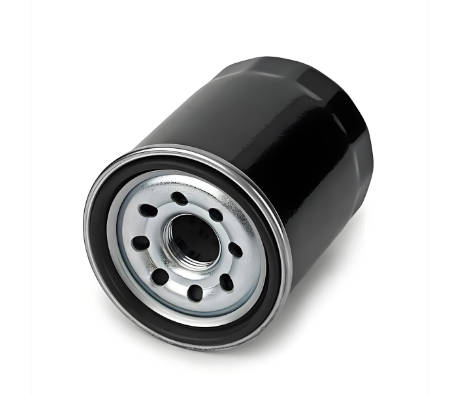
Key Inspection Parameters for Fuel Filter Elements
1. Dimensional Accuracy and Visual Inspection
We measure the element’s outer diameter, inner diameter, length, and seal ring dimensions using calibrated calipers. The media pleat count, pleat height, and pleat spacing are recorded. Visual inspection under 5× magnification detects media tears, loose end caps, adhesive voids, or rust on internal components.
2. Filter Media Integrity (Bubble Point Test) – ISO 2942
The element is immersed in isopropyl alcohol and pressurized with air. The first steady stream of bubbles indicates the maximum pore size. A low bubble point indicates media damage or oversized pores that allow large particles to pass.
3. Multi‑Pass Efficiency and Particle Retention – ISO 19438
On a test bench, the element is challenged with ISO 12103‑1 test dust. Upstream and downstream particle counts are measured by an automatic particle counter. We report the filtration ratio (β_x(c)), efficiency (%), and dirt holding capacity (grams). For diesel engines, typical requirements: β_10(c) ≥ 200 (99.5% efficiency) for high‑efficiency filters.
4. Water Separation Efficiency – ISO 16332 (Diesel Fuel)
We inject emulsified water into the test fluid upstream of the filter element and measure free water collected downstream. High‑efficiency water separators achieve > 95% water removal. Poor separation indicates coalescer media damage or improper element assembly.
5. Flow Restriction (Pressure Drop) – Clean Element
At the rated flow rate (L/min), we measure the pressure drop across the element using differential pressure transducers. Excessive ΔP (e.g., > 15 kPa) restricts fuel flow and starves the engine. Low ΔP with poor efficiency may indicate oversized media or inadequate filtration.
6. Collapse Burst Strength (Structural Integrity)
We subject the element to an increasing differential pressure until collapse or rupture. The minimum burst pressure must exceed the engine’s maximum fuel system operating pressure (e.g., 2 MPa for common rail systems).
7. Compatibility with Biofuels (B10, B20, B100)
For elements intended for biodiesel blends, we soak media samples in B20 at 60°C for 168 hours and re‑test tensile strength and dimensional stability. Swelling or softening is unacceptable.
8. Used Filter Element Contamination Analysis (for failure diagnostics)
We dissect used elements, wash retained particles, and perform gravimetric and microscopic analysis (SEM‑EDS) to identify the nature (dust, iron fines, carbon, water sludge) and source of contamination. This helps diagnose engine wear or fuel storage issues.
Quality Control and Reporting
Our fuel filter element inspection report includes a detailed summary of each test result, photographs of defects, and a clear pass/fail conclusion based on client‑supplied specifications. Raw data (particle counts, pressure drop curves, bubble point videos) are archived for 10 years. We also provide recommendations for filter selection, change intervals, or upstream contamination control.
In summary, thorough fuel filter element inspection protects fuel injection systems, extends engine life, and ensures reliable operation of vehicles, harvesters, and generators across Azerbaijan’s diverse climates – from the Caspian coast to the highlands.
Applications in the Azerbaijani Market
- Commercial vehicle fleets (trucks, buses): Quality verification of aftermarket diesel filters.
- Agricultural machinery (cotton harvesters, tractors): Inspection of fuel filters for combine harvesters.
- Oil and gas industry (generator sets, drilling rigs): High‑pressure common rail filter element testing.
- Fuel storage and distribution: Incoming inspection of filter elements for fuel depots.
- Import and trade: Third‑party verification for imported filter brands.
Why Choose ZKGX?
- State-of-the-art analytical equipment
- Highly qualified scientific team
- Fast turnaround time
- Competitive pricing