
Aluminum‑Based Boron Carbide Plate Inspection – Quality Assurance for Lightweight Armor and Neutron Shielding Applications
In Azerbaijan’s defense, nuclear energy, and aerospace sectors, aluminum‑based boron carbide plate inspection is essential to verify the structural integrity, ballistic performance, and neutron absorption capability of these advanced metal matrix composites. Aluminum‑B₄C plates combine the low density and toughness of aluminum with the extreme hardness and neutron capture cross‑section of boron carbide. They are used in armored vehicles, personal protection equipment, spent fuel storage casks, and reactor shielding. Our ISO/IEC 17025 accredited laboratory performs comprehensive non‑destructive and mechanical inspections – including ultrasonic C‑scan, density measurement, hardness profiling, edge and surface defect detection, and ballistic testing – to ensure that plates meet stringent military, nuclear, and aerospace specifications.
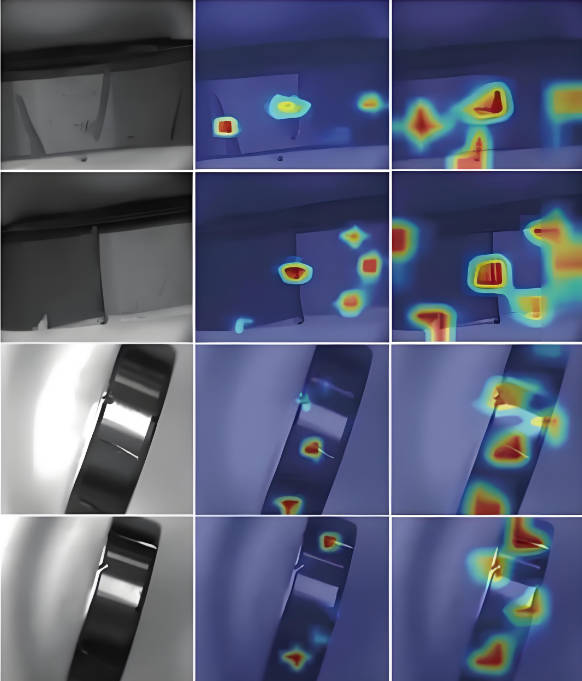
Key Defects and Inspection Parameters for Aluminum‑Boron Carbide Plates
We evaluate multiple critical aspects to guarantee the reliability of Al‑B₄C plates in demanding applications.
1. Ultrasonic C‑Scan (Immersion or Phased Array) – Internal Homogeneity
Al‑B₄C plates are susceptible to clustering of ceramic particles, porosity, and lack of bonding between aluminum matrix and boron carbide. We perform full‑field ultrasonic C‑scan to map the entire plate area. Any void cluster exceeding 2 mm² or delamination area greater than 5 mm² is recorded and rejected based on client criteria (e.g., ASTM E2375). This is the most critical test for ensuring ballistic consistency.
2. Density and Porosity Measurement (Archimedes Method)
We measure the bulk density of the plate using the water displacement method. The theoretical density is calculated from the volume fraction of B₄C (typically 15–30 vol%). Relative density should be > 98% of theoretical. Lower density indicates excessive porosity, which weakens ballistic resistance and neutron shielding efficiency.
3. Hardness Profiling (Rockwell or Brinell)
Using a Rockwell (HRB) or Brinell (HB) tester, we measure hardness at multiple points across the plate surface (e.g., 1 point per 100 cm²) and along the thickness in cross‑section. Acceptable hardness variation is typically ±10 HRB. Soft spots indicate poor matrix homogeneity or incomplete infiltration.
4. Visual and Dimensional Inspection
Under good lighting, we inspect surfaces for cracks, edge chips, delamination, scratches, discoloration (oxidation), and surface porosity. Dimensions (length, width, thickness) are measured with a calibrated caliper or coordinate measuring machine (CMM). Thickness tolerance is typically ±0.1 mm for precision‑machined plates.
5. Edge and Corner Integrity – Chipping Assessment
Al‑B₄C plates are brittle at edges. We inspect all edges under 10× magnification. Cracks or chips deeper than 1 mm are typically rejectable. For armor plates, edge defects can initiate fracture under ballistic impact.
6. Ballistic Impact Testing (MIL‑DTL‑32333 or STANAG 4569)
For armor‑grade plates, we perform ballistic testing using specified projectiles (e.g., 7.62 mm AP, 12.7 mm AP) at a certified firing range. Plates must stop the projectile without penetration and with limited backface deformation (e.g., < 25 mm). This destructive test is performed on witness coupons from the same production batch.
7. Boron Carbide Content Verification (Chemical Analysis)
We determine the actual B₄C weight percentage by dissolving the aluminum matrix in hot NaOH solution, filtering, and weighing the residual B₄C particles. Alternatively, X‑ray diffraction (XRD) quantifies the phases. This confirms that the plate meets the specified composition (e.g., 25% ± 2% B₄C).
8. Thermal Cycling Stability (for Nuclear Applications)
Plates are subjected to thermal cycles (e.g., 50°C → 250°C, 10 cycles) in a controlled oven. After cycling, we repeat ultrasonic C‑scan and measure dimensional changes. No new delamination or warpage > 0.5 mm is allowed.
9. Surface Roughness (Ra) for Coating or Bonding
Using a contact profilometer, we measure surface roughness on both faces. For plates intended for further bonding (e.g., to rubber spall liners), typical Ra requirement is 2–5 µm. Smoother surfaces may require treatment.
10. Neutron Attenuation Testing (for Shielding Plates)
Using a californium‑252 or americium‑beryllium neutron source, we measure the transmission through the plate and calculate the macroscopic cross‑section (Σ, cm⁻¹). Results are compared to Monte Carlo simulations based on B₄C content.
Reporting and Deliverables
Our aluminum‑based boron carbide plate inspection report includes:
- Plate identification (batch number, dimensions, nominal B₄C content, manufacturer).
- Ultrasonic C‑scan image (color‑coded defect map).
- Density and porosity results.
- Hardness profile table and cross‑section micrograph (if requested).
- Visual and edge defect photographs.
- Ballistic test results (if performed).
- Chemical analysis (B₄C %).
- Thermal cycling and roughness data.
- Pass/fail conclusion based on client‑supplied specifications.
- Raw data (ultrasonic waveforms, C‑scan files, chemical logs) archived for 10 years.
We do not issue generic compliance statements without specific acceptance criteria. Our reports are accepted by local defense contractors, nuclear facility operators, and aerospace manufacturers.
In summary, thorough aluminum‑based boron carbide plate inspection ensures that these advanced composite plates deliver reliable ballistic protection, neutron shielding, and structural integrity for Azerbaijan’s most demanding applications – from armored vehicles to nuclear research centers.
Applications in the Azerbaijani Market
- Defense and security (Ministry of Defense, internal troops): Lightweight armor plates for personnel carriers and body armor.
- Nuclear industry (research reactors, medical isotope production): Neutron shielding for spent fuel storage and hot cells.
- Aerospace maintenance: Helicopter floor armor and cockpit shielding.
- Civilian security (bank vaults, embassy reinforcement): High‑hardness protective panels.
- Export and manufacturing: Third‑party quality verification for plates destined for international buyers.
Why Choose ZKGX?
- State-of-the-art analytical equipment
- Highly qualified scientific team
- Fast turnaround time
- Competitive pricing