
Electric Ventilation Window Inspection – Performance and Safety Verification for Automated Airflow Systems
In modern residential, commercial, and industrial buildings across Azerbaijan, electric ventilation window inspection is essential to ensure that motorized window systems operate reliably, safely, and efficiently under diverse climatic conditions. These windows, equipped with electric actuators, sensors, and control units, are used for automated smoke extraction, natural ventilation, and indoor air quality management. Our ISO/IEC 17025 accredited laboratory performs comprehensive inspections covering mechanical operation, electrical safety, weather sealing, actuator performance, and control system functionality.
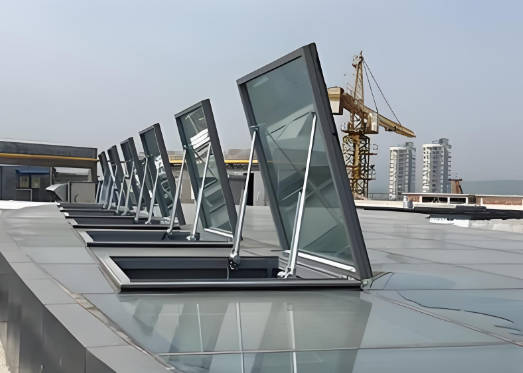
Key Testing Parameters in Electric Ventilation Window Inspection
We evaluate multiple critical aspects to verify that electric windows meet design specifications and safety regulations.
1. Actuator Force and Stroke Test
We measure the force exerted by the electric actuator (push/pull) using a calibrated force gauge. The stroke length is verified against the nominal value. Excessive force may damage the window frame; insufficient force prevents proper sealing. Typical requirements: opening force ≤ 150 N, closing force ≤ 200 N, stroke ±2 mm tolerance.
2. Operational Cycle Test (Endurance)
The window is subjected to 10,000 or 20,000 open‑close cycles (as specified) at a rate of 3–6 cycles per minute. After cycling, we check for wear on gears, motor current consistency, sealing integrity, and any loss of torque. No failure or performance degradation is allowed.
3. Electrical Safety – Insulation Resistance and Dielectric Strength
Using a megohmmeter, we measure insulation resistance between live parts and accessible metal parts (≥ 10 MΩ). Dielectric strength test applies 1000 V AC for 1 minute – no breakdown permitted. Ground continuity is verified (≤ 0.1 Ω).
4. Weather Sealing and Air Permeability – EN 12207 / ASTM E283
The closed window is subjected to a pressure differential (e.g., 300 Pa) while airflow is measured. Acceptable air leakage is defined by the relevant standard (e.g., Class 4 for residential, Class 2 for industrial). Water penetration resistance is tested using a spray rack at 150–600 Pa pressure difference.
5. Control and Sensor Functionality
We test all input commands (manual switch, remote control, building automation signal, rain/wind sensors). Response time, limit switch accuracy, and fail‑safe behavior (e.g., close on power loss) are verified. For smoke ventilation windows, we simulate a fire alarm signal and measure opening time (≤ 60 seconds).
6. Environmental Simulation – Temperature and Humidity
The window assembly (or actuator components) is placed in a climatic chamber and subjected to cycles between -20°C and +70°C (typical Azerbaijani extreme temperatures). After conditioning, operation is re‑tested; no sticking, cracking, or performance loss is allowed.
7. Corrosion Resistance (for metal parts)
Actuator housings, screws, and linkages are tested in a salt spray chamber (240–480 hours) per ISO 9227. Red rust or pitting is not permitted.
8. Smoke and Fire Safety (for smoke extraction windows)
For windows installed in fire compartments, we verify that the actuator can open the window against wind load and that the mechanism does not fail when exposed to 300°C for 30 minutes (tested on a dedicated sample).
9. Noise Emission During Operation
Sound pressure level (dB(A)) is measured at 1 m distance during window movement. Typical limit: ≤ 55 dB(A) for residential applications, ≤ 65 dB(A) for industrial.
On‑Site Installation and Commissioning Inspection
Beyond laboratory tests, we provide on‑site inspection of installed electric ventilation windows: alignment of frame, sealing gasket condition, actuator mounting, electrical wiring conformity, and proper functioning of end‑of‑stroke limit switches. We also check the emergency manual override (if equipped).
Quality Assurance and Documentation
Our electric ventilation window inspection report includes detailed results for each parameter, photographs of any defects, and a clear pass/fail conclusion based on client‑supplied specifications. Raw data (force curves, cycle logs, temperature records) are archived for 10 years. Accreditation to ISO/IEC 17025 ensures traceability and international acceptance.
Applications in the Azerbaijani Market
- High‑rise residential buildings in Baku: Automated windows for natural ventilation and smoke control.
- Commercial complexes (Ganjlik Mall, Port Baku): Large‑span smoke exhaust windows requiring regular inspection.
- Industrial plants (Sumgayit, Mingachevir): Ventilation windows for chemical and power facilities.
- Healthcare facilities (hospitals, clinics): Hygienic automated windows with fail‑safe closing.
- Educational and public buildings (schools, universities): Safety‑compliant electric windows for air quality management.
Why Choose ZKGX?
- State-of-the-art analytical equipment
- Highly qualified scientific team
- Fast turnaround time
- Competitive pricing