
Detection of Cross‑linked Polystyrene – Quality Assessment for Insulation, Adsorption and Specialized Polymer Applications
In Azerbaijan’s construction, chemical, and water treatment industries, detection of cross‑linked polystyrene is essential to verify that expanded polystyrene (EPS) foam, extruded polystyrene (XPS) boards, and polystyrene‑based ion‑exchange resins meet the required degree of cross‑linking, density, thermal stability, and chemical resistance. Cross‑linked polystyrene (XPS) is produced by adding a cross‑linking agent (e.g., divinylbenzene – DVB) during polymerization, creating a three‑dimensional network that improves mechanical strength, solvent resistance, and thermal stability. Our ISO/IEC 17025 accredited laboratory provides comprehensive testing services – including gel content (degree of cross‑linking), solvent absorption, thermal analysis (DSC, TGA), density, compressive strength, and chemical resistance – to ensure compliance with international standards (ASTM D2765, ISO 4590, EN 13163) and local construction and water treatment regulations.
Why Detection of Cross‑linked Polystyrene is Critical for Performance and Durability
Non‑cross‑linked polystyrene (ordinary PS) dissolves in many organic solvents, softens at low temperatures, and has poor mechanical strength. Cross‑linked polystyrene, however, is used in demanding applications such as rigid foam insulation (XPS boards for building envelopes), ion‑exchange resins for water softening, and adsorbents for petrochemical purification. A precise detection of cross‑linked polystyrene method quantifies the gel fraction (insoluble polymer network) and helps manufacturers optimize cross‑linker content, end‑users verify batch consistency, and importers screen for adulteration with non‑cross‑linked material.
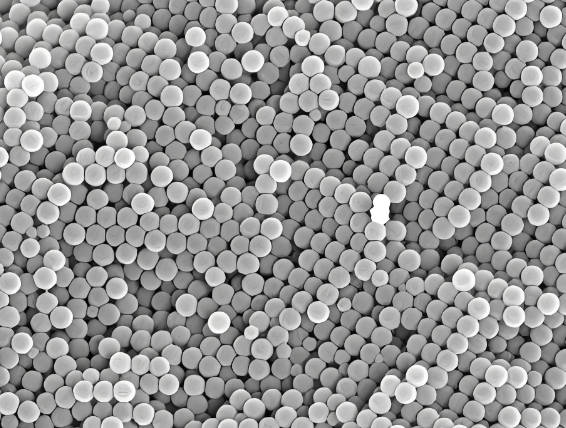
Key Test Methods for Detecting Cross‑linked Polystyrene
1. Gel Content (Degree of Cross‑linking) – ASTM D2765 / ISO 10147
The most direct detection of cross‑linked polystyrene involves Soxhlet extraction with toluene (or xylene) for 16–24 hours. Cross‑linked PS is insoluble; only the soluble (non‑cross‑linked) fraction is extracted. The gel content is calculated as: Gel (%) = (extracted dry weight / initial dry weight) × 100%. For XPS foam used in construction, gel content should be ≥ 85% (preferably ≥ 90%). For ion‑exchange resin beads, gel content is typically 98–99% (highly cross‑linked). Lower gel content indicates insufficient cross‑linking, leading to poor solvent resistance and creep under load.
2. Solvent Absorption (Swelling Ratio) – ASTM D2765
After the extraction test, the swollen gel is weighed immediately after removal from the solvent. The swelling ratio (Q) = (wet weight of gel / dry weight of gel). For loosely cross‑linked PS (e.g., for sound absorption), Q may be 10–20; for highly cross‑linked ion‑exchange resin, Q is 1.5–2.5. Excessive swelling (> 5 for structural foam) indicates insufficient cross‑link density, leading to dimensional instability.
3. Density and Porosity – ISO 4590 / ASTM D1622
We measure bulk density of cross‑linked foam by cutting a precisely dimensioned specimen (100×100×thickness) and weighing. Apparent density (kg/m³) is calculated. For XPS insulation, typical density ranges from 30–45 kg/m³. Closed‑cell content is measured using a gas pycnometer (helium) and a foam volume meter. High closed‑cell content (> 90%) ensures low water absorption and high thermal resistance. Low density combined with low gel content indicates poor‑quality foam.
4. Thermal Stability – Thermogravimetric Analysis (TGA) – ISO 11358
We heat a 10 mg sample from 25°C to 700°C at 10°C/min under nitrogen. Cross‑linked PS decomposes at about 400°C; non‑cross‑linked PS decomposes at 350–380°C. The char residue at 600°C (typically < 5% for PS) should be consistent. Shifts in decomposition temperature indicate incomplete cross‑linking or the presence of non‑cross‑linked polymer.
5. Glass Transition Temperature (Tg) – Differential Scanning Calorimetry (DSC) – ISO 11357
Linear polystyrene has a Tg of about 100°C. Cross‑linked polystyrene may show a broader transition or higher Tg due to network restrictions. We scan from 30°C to 200°C at 20°C/min. A sharp, pronounced Tg suggests low cross‑linking; a very weak or absent Tg indicates high cross‑linking. For XPS foam, a weak Tg (> 105°C) is acceptable.
6. Chemical Resistance (Solvent Immersion) – ISO 175 / EN 13163
We immerse foam or resin samples in common solvents: toluene, acetone, diesel fuel, and 10% NaCl solution at 23°C for 7 days. After immersion, we measure weight change, volume change, and compressive strength retention. Cross‑linked PS should not dissolve or disintegrate. Weight loss > 5% or strength loss > 30% indicates insufficient cross‑linking.
7. Compressive Strength (at 10% Deformation) – EN 826 / ASTM D1621
We cut 50×50×thickness specimens from cross‑linked foam board and compress them at a rate of 10% of thickness per minute. Compressive strength (kPa) at 10% deformation is recorded. For XPS boards, minimum strength at 10% compression is 150–300 kPa depending on density. Low compressive strength with high gel content suggests poor cell structure (open cells).
8. Cross‑link Density by Equilibrium Swelling (Flory‑Rehner Equation)
Using the swelling ratio in a good solvent (toluene) and the polymer‑solvent interaction parameter (χ), we calculate the average molecular weight between cross‑links (Mc). Lower Mc means higher cross‑link density. This is a more quantitative detection of cross‑linked polystyrene for R&D purposes.
9. Infrared Spectroscopy (FTIR) – Detection of Residual DVB
We analyze a thin film or KBr pellet using FTIR. Cross‑linked polystyrene shows peaks at 1600 cm⁻¹ (aromatic), 700–900 cm⁻¹ (substituted benzene), and a broad shoulder due to cross‑linking. The peak ratio of 1600 cm⁻¹ to a reference peak (e.g., 1450 cm⁻¹) can be correlated to cross‑linker content after calibration.
10. Ash Content (Mineral Filler) – ISO 3451
We combust a weighed sample at 550°C and weigh the residue. Low ash (< 1%) is typical for pure polystyrene. Higher ash indicates filler (e.g., talc, chalk) added to reduce cost, which may negatively affect cross‑linking and mechanical properties.
Quality Grading and Acceptance Criteria
Based on our detection of cross‑linked polystyrene, we classify materials into three grades (clients provide specific acceptance criteria):
- Grade A (Premium) – Gel content ≥ 95%, swelling ratio (toluene) ≤ 2.5, compressive strength ≥ 300 kPa, density ≥ 38 kg/m³, closed‑cell content ≥ 92%, passes solvent immersion.
- Grade B (Standard) – Gel content 85–94%, swelling ratio 2.5–4.0, compressive strength 200–300 kPa, density 30–38 kg/m³, closed‑cell content 85–92%.
- Grade C (Reject) – Gel content < 85%, swelling ratio > 4, compressive strength < 200 kPa, dissolved in toluene – not suitable for XPS or resin applications.
Reporting and Deliverables
Our detection of cross‑linked polystyrene report includes: sample identification (product type, density, nominal cross‑linker content), gel content (%), swelling ratio, density and closed‑cell content, TGA/DSC thermograms, compressive strength curve, solvent resistance observation (photos), FTIR spectrum (if performed), ash content, and a clear pass/fail conclusion based on client‑supplied specifications. Raw data (extraction logs, thermal curves, swelling images) are archived for 10 years. We do not issue generic compliance statements without specific acceptance criteria.
In summary, accurate detection of cross‑linked polystyrene ensures that insulating foam boards retain their shape under load, resist solvents, and provide long‑term thermal efficiency, and that ion‑exchange resins function properly in water treatment plants. Contact our Baku laboratory to schedule testing for your XPS boards, EPS beads, or polymer resin batches.
Applications in the Azerbaijani Market
- Building insulation (Baku, Ganja, Sumgayit): Quality verification of imported XPS boards for foundation and flat roof insulation.
- Water treatment plants (Baku, Mingachevir): Testing of cross‑linked PS ion‑exchange resins for water softening and demineralization.
- Oil and gas industry (SOCAR refineries): Adsorbent resins for hydrocarbon purification – verification of solvent resistance.
- Packaging industry: Cross‑linked EPS foam for protective packaging of sensitive electronics.
- Research laboratories (ADA University, Baku High Oil School): Characterization of novel cross‑linked PS materials.
Why Choose ZKGX?
- State-of-the-art analytical equipment
- Highly qualified scientific team
- Fast turnaround time
- Competitive pricing