
Oxide Zirconia Ceramic Ball Detection – Quality Assessment for High‑Performance Bearings and Precision Components
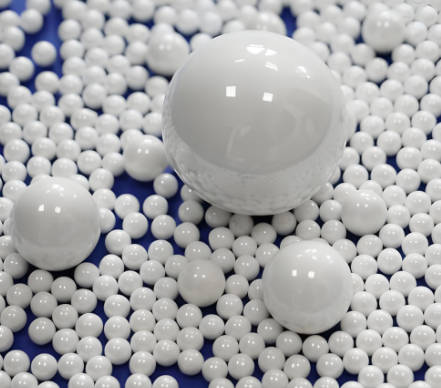
In Azerbaijan’s growing industrial sectors – including oil & gas equipment, precision machining, and medical device manufacturing – oxide zirconia ceramic ball detection is essential to verify that zirconia balls meet the stringent requirements for hardness, density, sphericity, and surface integrity. Zirconia (ZrO₂) ceramic balls are widely used in hybrid bearings, check valves, grinding media, and aerospace components due to their high hardness, wear resistance, low thermal conductivity, and corrosion resistance. Our ISO/IEC 17025 accredited laboratory provides comprehensive inspection services – including dimensional accuracy, sphericity, surface roughness, hardness, density, phase composition, fracture toughness, and porosity – to ensure compliance with international standards (ISO 3290, ASTM F2094, DIN 5401) and local industry specifications.
Why Oxide Zirconia Ceramic Ball Detection is Critical for High‑Reliability Applications
Zirconia balls used in hybrid bearings or precision valves must maintain perfect sphericity (< 0.1 µm deviation) and freedom from surface cracks or pores. A single defective ball can cause bearing seizure, valve leakage, or premature wear. Systematic oxide zirconia ceramic ball detection helps manufacturers, importers, and end‑users verify that each batch meets the required grade (e.g., Grade 5, Grade 10, Grade 25 per ISO 3290) and performs reliably under high load, high speed, or corrosive conditions.
Key Inspection Parameters for Zirconia Ceramic Balls
1. Dimensional Accuracy and Sphericity – ISO 3290 / ASTM F2094
Using a high‑precision measuring machine (air gauge or laser micrometer) with resolution of 0.01 µm, we measure the ball diameter at multiple orientations (typically 5–10 positions). The deviation from nominal diameter (e.g., 6.3500 mm ± 0.5 µm for Grade 5) is recorded. Sphericity is defined as the difference between the maximum and minimum diameter. For Grade 5 balls, sphericity ≤ 0.13 µm; for Grade 10, ≤ 0.25 µm. Out‑of‑tolerance balls cause uneven load distribution and premature bearing failure.
2. Surface Roughness (Ra, Rz) – ISO 3290‑2 / Profilometry
Using a stylus profilometer or interferometric microscope, we measure the average roughness (Ra) and peak‑to‑valley roughness (Rz) on the ball surface. For bearing balls, typical Ra ≤ 0.01 µm (10 nm). Higher roughness increases friction and noise. We also perform a visual inspection under 50× magnification for visible scratches, pits, or cracks.
3. Vickers Hardness (HV10 or HV1) – ASTM E92 / ISO 6507
We press a diamond indenter (10 kg load for macro‑hardness, 1 kg for micro‑hardness) into a polished zirconia ball section (cut and mounted). For sintered zirconia, typical hardness is 1200–1300 HV. Lower hardness (< 1100 HV) indicates excessive porosity or incomplete sintering. Hardness variation > 10% across a batch suggests inconsistent processing.
4. Density (Apparent and Theoretical) – Archimedes Method
We measure the dry weight and the suspended weight in deionized water using a precision balance (0.0001 g resolution). The density is calculated. For yttria‑stabilized zirconia (Y‑TZP), theoretical density is 6.05–6.10 g/cm³. Apparent density should be ≥ 99.8% of theoretical. Lower density indicates closed porosity, which weakens the ball.
5. Phase Composition (X‑Ray Diffraction – XRD) – Retention of Tetragonal Phase
Zirconia balls must retain the tetragonal phase (t‑ZrO₂) for high fracture toughness. We analyze a ground sample by XRD and quantify monoclinic (m) and tetragonal (t) phases. Acceptable m‑phase content: < 5% for as‑sintered balls. Higher monoclinic content causes spontaneous cracking (low‑temperature degradation – LTD). For low‑temperature aging tests, we also expose balls to 140°C steam for 100 hours and re‑measure phase content.
6. Fracture Toughness (K₁c) – Indentation Method (IF) – ISO 28079
We make a Vickers indentation on a polished surface and measure the lengths of radial cracks from the corners. Fracture toughness is calculated using an empirical formula. For Y‑TZP, K₁c should be 6–10 MPa·√m. Low toughness makes balls susceptible to chipping under impact loads.
7. Porosity (Image Analysis of Polished Cross‑Section)
A polished cross‑section (mounted, ground to 1 µm finish) is examined under an optical microscope at 200×. The area percentage of pores (including cracks, voids) is measured using image analysis software. Acceptable porosity: < 0.5% for bearing grade. Pores act as crack initiation sites.
8. Surface Defect Detection – Fluorescent Dye Penetrant (PT) or Automated Vision
We apply a fluorescent penetrant to the balls, dwell, rinse, and examine under UV light. Any bright indication indicates a surface crack. For high‑volume inspection, we use an automated vision system with a rotating drum and high‑speed camera (50 frames/s) to detect chips, cracks, or discoloration. Rejection threshold: any crack longer than 50 µm or visible chip.
9. Electrical Resistivity (for conductive applications) – ASTM D257
For balls used in electrical insulation applications, we measure volume resistivity (Ω·cm) using a guarded electrode setup. Zirconia is an insulator; resistivity should be > 10¹² Ω·cm. Lower values indicate contamination or reduced yttria content.
10. Thermal Shock Resistance – Quench Test
We heat balls to 300°C in an oven, then quench in water at 20°C. After drying, we inspect for cracks using dye penetrant. Any crack after 3 cycles causes rejection. Poor thermal shock resistance leads to failure during rapid temperature changes in service.
11. Rolling Contact Fatigue (for bearing balls – optional)
In a specialized ball‑on‑disc or ball‑rod fatigue tester, we run 10 balls under a contact stress of 4–5 GPa for 10⁷ cycles. We monitor vibration and inspect for spalling or flaking after the test. No failure is allowed for Grade 5 balls.
Quality Grading and Acceptance Criteria
Based on our oxide zirconia ceramic ball detection, we classify balls into three quality grades (clients provide specific acceptance criteria):
- Grade A (Premium Bearing Grade) – Grade 5 per ISO 3290, sphericity ≤ 0.13 µm, Ra ≤ 0.01 µm, hardness ≥ 1200 HV, density ≥ 99.8% theoretical, m‑phase < 3%, K₁c > 8 MPa·√m, porosity < 0.2%.
- Grade B (Standard Industrial Grade) – Grade 10 or Grade 25, sphericity ≤ 0.5 µm, Ra ≤ 0.02 µm, hardness ≥ 1100 HV, density ≥ 99.5% theoretical, m‑phase < 5%, K₁c > 6 MPa·√m, porosity < 0.5%.
- Grade C (Reject – Not Suitable for Bearings) – Sphericity > 1 µm, cracks visible, density < 99%, m‑phase > 10%, K₁c < 5 MPa·√m – use only as low‑stress grinding media.
Reporting and Deliverables
Our oxide zirconia ceramic ball detection report includes: batch identification (size, grade, manufacturer, lot number), dimensional and sphericity data (individual measurements), surface roughness profile, hardness and density values, XRD phase quantification (including before/after aging), fracture toughness result, porosity image and percentage, PT/vision inspection photos, and a clear pass/fail conclusion based on client‑supplied specifications. Raw data (XRD patterns, indentation images, fatigue logs) are archived for 10 years. We do not issue generic compliance statements without specific acceptance criteria.
In summary, comprehensive oxide zirconia ceramic ball detection ensures that zirconia balls deliver superior rolling life, dimensional stability, and corrosion resistance in demanding applications – from deep hole drilling tools to hybrid bearings. Contact our Baku laboratory to schedule batch testing for your next procurement or production run.
Applications in the Azerbaijani Market
- Oil and gas drilling equipment (downhole motors, mud motors): High‑toughness zirconia balls for bearings.
- Industrial pumps and valves (Sumgayit, Baku): Corrosion‑resistant check valves with zirconia balls.
- Aerospace and defense (local maintenance facilities): Precision bearings for actuators and gyroscopes.
- Medical devices (dental bearings, implant components): Biocompatible zirconia balls.
- Grinding media for paint and pigment mills: Hardness and density validation.
Why Choose ZKGX?
- State-of-the-art analytical equipment
- Highly qualified scientific team
- Fast turnaround time
- Competitive pricing