
Vehicle Display Cover Plate Inspection – Quality Assurance for Automotive Glass and Plastic Covers
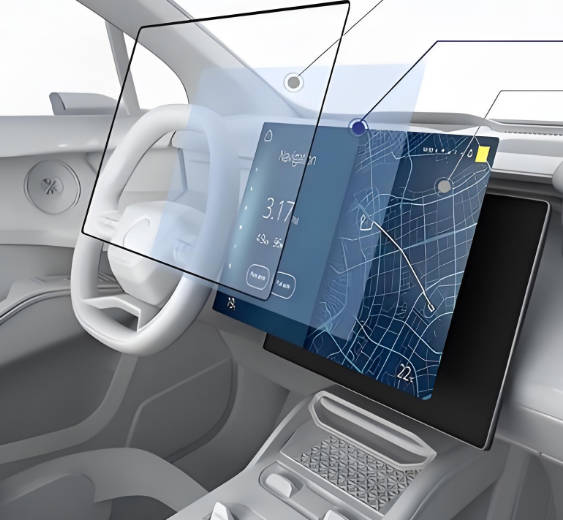
In Azerbaijan’s growing automotive assembly and electronics sectors, vehicle display cover plate inspection is essential to verify that protective covers for infotainment screens, instrument clusters, and center consoles meet optical clarity, mechanical durability, and environmental resistance standards. Cover plates (made from soda‑lime glass, aluminosilicate glass, polycarbonate, or PMMA) protect sensitive displays from scratches, impact, UV radiation, and thermal shock. Our ISO/IEC 17025 accredited laboratory provides comprehensive inspection services – including light transmittance, haze, surface hardness, scratch resistance, impact strength, thermal cycling, UV aging, dimensional accuracy, and defect detection – to ensure compliance with international automotive standards (ISO 20653, IEC 60068, ASTM D1044, SAE J576) and local vehicle safety regulations.
Key Inspection Parameters for Vehicle Display Cover Plates
We evaluate multiple critical aspects to guarantee the reliability and optical performance of display cover plates in Azerbaijan’s diverse climate – from Caspian coastal humidity to mountainous temperature extremes.
1. Optical Properties – Light Transmittance and Haze – ASTM D1003 / ISO 13468
Using a spectrophotometer with an integrating sphere, we measure total light transmittance (T%) and haze (%). For glass cover plates, transmittance should be ≥ 90% (with anti‑reflective coating) or ≥ 88% (without coating). For plastic covers, transmittance ≥ 85% is typical. Haze (scattered light) should be < 2% for premium displays and < 5% for standard covers. High haze reduces contrast and readability under sunlight.
2. Surface Hardness – Pencil Hardness Test – ASTM D3363 / ISO 15184
We draw pencils of increasing hardness (from 6B to 9H) across the cover plate surface at a 45° angle under a 750 g load. The hardest pencil that does not scratch or gouge the surface defines the hardness. For automotive applications, minimum acceptable hardness is 3H (glass) or 2H (plastic). Softer surfaces are prone to scratching during cleaning or daily use.
3. Scratch Resistance – Steel Wool Abrasion Test – ASTM F2357
Using an automated abrasion tester, we rub a #0000 steel wool pad (500 g load) across the cover plate surface for 500 cycles. After testing, we measure Δhaze (change in haze) and check for visible scratches under a 20x microscope. Acceptable Δhaze < 3% and no visible scratches longer than 2 mm.
4. Impact Resistance – Falling Ball Test – IEC 60068‑2‑32 / ASTM D5420
We drop a steel ball (mass 30 g to 500 g, depending on application) from a specified height (e.g., 0.5 m, 1.0 m) onto the cover plate supported by a rubber pad. After impact, we inspect for cracks, chips, or shattered glass. For head impact protection (human safety), the plate must not shatter into sharp fragments (e.g., laminated glass with interlayer).
5. Dimensional Accuracy and Warpage – CMM or Optical Comparator
Using a coordinate measuring machine (CMM) or vision measurement system, we measure critical dimensions: overall length/width, thickness, hole positions, and edge curvature. Thickness tolerance: ±0.1 mm for glass, ±0.05 mm for precision plastic covers. Flatness is checked using a surface plate and feeler gauge; allowable warpage < 0.3 mm over 100 mm length. Excessive warpage causes display bonding failure or Newton’s ring interference.
6. Surface Defect Inspection (Scratches, Bubbles, Pits, Contamination)
Under uniform 1000–1500 lux illumination, we scan the cover plate for surface and embedded defects using a magnifying lamp (10×) and, for automated detection, a machine vision system (5 µm resolution). Defects are classified by type and size. Acceptance criteria: scratches longer than 3 mm are rejectable; bubbles or pits > 0.2 mm not allowed in the viewing area.
7. Chemical Resistance – Cleaning Agent and Perspiration Test – ISO 9211‑5
We apply cotton pads soaked with common cleaning agents (isopropanol, ethanol, 3% NaCl solution simulating sweat) to the cover plate surface for 1 hour, then rinse and inspect for clouding, delamination, or color change. Any visible attack on the anti‑reflective or oleophobic coating causes failure.
8. Environmental Cycling – Thermal Shock and Humidity – IEC 60068‑2‑14
We subject cover plates to 20 thermal cycles: -40°C (2 hours) → +85°C (2 hours) with 1 minute transition. After cycling, we re‑measure transmittance and inspect for cracks, delamination, or coating peeling. For components bonded to displays, we also check for bubble formation between the cover and display module.
9. UV Resistance (Sunlight Aging) – ISO 4892‑2 / ASTM G155
Using a xenon arc weathering chamber (0.35 W/m² at 340 nm, 60°C black panel), we expose cover plates for 500 hours. After exposure, we measure color change (ΔE) and transmittance loss. For automotive interior applications, ΔE < 3 and transmittance loss < 5% are required. Yellowing or crazing indicates poor UV stabilizer content.
10. Anti‑Fogging Performance (for Heated Displays) – ISO 9352 (modified)
We place the cover plate over a water bath at 40°C (50% relative humidity gradient) and observe fog formation on the unheated side. For anti‑fog coated plates, no visible fog should form within 30 seconds. We also measure the water contact angle (θ) – hydrophobic surfaces (θ > 90°) tend to fog less.
11. Haptic Response (Fingerprint and Glide Feel) – Subjective Panel Evaluation
Using a trained panel (5 assessors), we evaluate the cover plate’s fingerprint repellency and finger‑glide feel after wiping. For oleophobic coatings, oil residue should be easily removed without streaking. Quantitative measurement using contact angle of hexadecane provides a proxy: angle > 60° indicates good oleophobicity.
Quality Grading and Acceptance Criteria
Based on our vehicle display cover plate inspection, we classify cover plates into three grades (clients provide specific acceptance criteria):
- Grade A (Premium) – Transmittance ≥ 92%, haze < 2%, hardness ≥ 6H, scratch Δhaze < 2%, thermal cycle passes, ΔE < 2, no visible defects in viewing area.
- Grade B (Standard) – Transmittance 88–92%, haze 2–5%, hardness 3–5H, scratch Δhaze 2–4%, thermal cycle passes, ΔE 2–3, minor edge defects allowed.
- Grade C (Reject) – Transmittance < 88%, haze > 5%, hardness < 3H, scratches visible, thermal cycle cracks, or coating peeling – not suitable for vehicle use.
Reporting and Deliverables
Our vehicle display cover plate inspection report includes: sample identification (material type, coating, dimensions, batch number), transmittance and haze spectra, hardness and abrasion results, impact test photos, dimensional map (CMM data), defect map (vision system output), thermal and UV test logs, and a clear pass/fail conclusion based on client‑supplied specifications. Raw data (spectra, scratch images, thermal camera logs) are archived for 10 years. We do not issue generic compliance statements without specific acceptance criteria.
In summary, comprehensive vehicle display cover plate inspection ensures that automotive screens remain clear, scratch‑resistant, and durable throughout the vehicle’s life – from the Caspian coastal humidity to mountain temperature extremes. Contact our Baku laboratory to schedule testing for your cover plate production batches or supplier verification.
Applications in the Azerbaijani Market
- Automotive assembly plants (Nakhchivan, Ganja): Incoming quality control for display cover plates from international suppliers.
- Vehicle electronics manufacturers (Baku, Sumgayit): Validation of instrument cluster windows and center console touchscreens.
- Aftermarket car infotainment installers: Testing replacement cover plates for scratch resistance and optical clarity.
- Mudarabah and taxi fleet operators: Durability assessment for high‑use touchscreen covers in public vehicles.
- Export to neighboring markets (Turkey, Russia, Iran): Conformity with ECE or GOST standards.
Why Choose ZKGX?
- State-of-the-art analytical equipment
- Highly qualified scientific team
- Fast turnaround time
- Competitive pricing