
Fireproof Sealing Panel Inspection – Ensuring Compartmentation Integrity for Building and Industrial Fire Safety
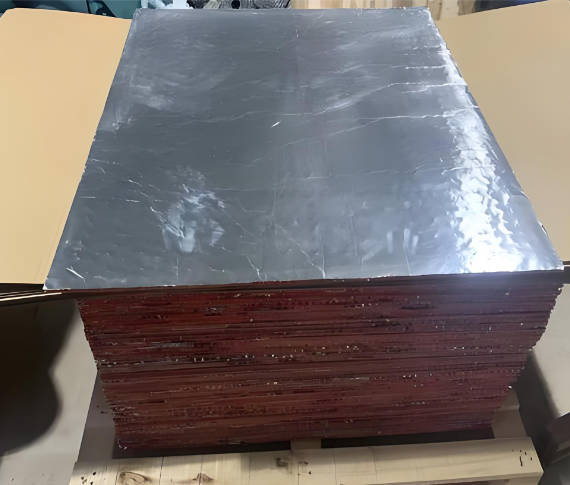
In Azerbaijan’s rapidly expanding construction sector – including high‑rise residential towers in Baku, industrial plants in Sumgayit, and commercial complexes in Ganja – fireproof sealing panel inspection is essential to verify that passive fire protection systems maintain their integrity under real fire conditions. Fireproof sealing panels (also known as fire barrier boards, fire‑rated insulation panels, or intumescent fire stops) are installed in wall and floor penetrations (cables, pipes, ducts), expansion joints, curtain wall gaps, and suspended ceilings to prevent flame and smoke spread between compartments. Our ISO/IEC 17025 accredited laboratory provides comprehensive inspection services – including material identification, dimensional accuracy, density measurement, compressive strength, high‑temperature performance, intumescence testing, and smoke leakage assessment – to ensure compliance with international fire safety standards (ASTM E814, EN 1366, ISO 834) and local regulations of the State Agency for Control over Construction and Housing.
Why Fireproof Sealing Panel Inspection is Critical for Passive Fire Protection
Improperly installed or degraded fire sealing panels can allow fire and toxic smoke to bypass compartment walls within minutes, endangering occupants and firefighters. Common failure modes include incorrect panel thickness for the required fire rating (e.g., 60, 90, 120 minutes), loss of intumescent expansion capacity due to humidity or UV exposure, mechanical damage during adjacent construction, or missing edge seals. A systematic fireproof sealing panel inspection helps building owners, contractors, and fire safety officers ensure that all passive fire stops remain effective for the building’s service life, typically 25–30 years.
Key Inspection Parameters for Fireproof Sealing Panels
1. Material Composition and Density Verification
We identify the panel material: calcium silicate, mineral wool (stone wool or glass wool), gypsum‑based, or intumescent (graphite‑ or vermiculite‑based). Bulk density is measured by weighing a precisely cut sample (100×100×thickness) and calculating mass per volume (kg/m³). For mineral wool panels, density should be 120–200 kg/m³; for calcium silicate, 400–800 kg/m³. Lower density may indicate poor compaction, reducing fire resistance.
2. Dimensional Accuracy (Thickness, Length, Width, Squareness)
Using a calibrated steel ruler and square, we measure panel dimensions. Thickness tolerance for fire‑rated panels is typically ±1 mm for panels ≤ 50 mm thick, ±2 mm for thicker panels. Undersized panels create gaps that allow flame passage; oversized panels cause compression damage during installation.
3. Compressive Strength (at Ambient and Elevated Temperature)
We cut 50×50 mm specimens and compress them at a rate of 1 mm/min using a universal testing machine. At ambient temperature, minimum compressive strength for fireproof panels is typically 0.3–0.5 MPa (for mineral wool) to 5–10 MPa (for calcium silicate). For elevated temperature, we heat specimens to 300°C and 600°C before testing; strength loss should not exceed 50% of ambient value. Excessive loss indicates poor binder stability.
4. Intumescence Expansion Ratio (for Intumescent Panels)
Intumescent fire panels expand when heated to form a char layer that seals gaps. We heat a 25×25×thickness specimen to 300°C for 30 minutes, then to 600°C for 60 minutes. We measure linear expansion in thickness and area. Minimum expansion ratio: 5× original thickness for 60‑minute fire rating, 10× for 120‑minute rating. Panels that do not expand sufficiently fail under fire.
5. High‑Temperature Performance (Furnace Test – Small Scale)
We mount the panel in a small vertical furnace and heat one face following the ISO 834 time‑temperature curve (e.g., 945°C at 60 minutes). Thermocouples on the unexposed face record temperature rise. The panel passes if the average unexposed face temperature remains below 140°C above ambient and no flaming occurs on the unexposed face for the required duration (e.g., 90 minutes).
6. Smoke Leakage (Ambient and Elevated Temperature)
Using a purpose‑built test rig, we apply a differential pressure of 25 Pa across the panel (simulating stack effect during a fire). Air leakage (L/s/m²) is measured at ambient temperature and after heating to 200°C. Acceptable leakage: < 10 L/s/m² at 25 Pa for fire‑rated assemblies.
7. Water Absorption and Humidity Aging
Panels are immersed in water at 23°C for 24 hours, then weighed. Water absorption is calculated as percentage of dry weight. For mineral wool panels, absorption > 500% is typical; for calcium silicate, < 10% is required. After absorption, we re‑test compressive strength; loss > 30% indicates susceptibility to moisture degradation (common in untreated gypsum or low‑density mineral wool).
8. Edge Integrity and Handling Damage Assessment
We inspect panel edges for chipping (> 5 mm deep) or cracking. Damaged edges reduce effective sealing width and may require repair or replacement. For panels intended for compression fit (friction‑held), edge parallelism is checked using a dial gauge.
9. Compatibility with Sealants and Firestop Accessories
Where panels are used in conjunction with firestop sealants (silicone, acrylic, intumescent) or steel/plastic pipe penetrations, we test the assembled mock‑up in a small furnace. Separation between panel and sealant or melt‑through of plastic pipes indicates design failure.
10. Accelerated Aging – Thermal Cycling (‑20°C to +50°C)
We subject panels to 50 thermal cycles (‑20°C for 4 hours, +50°C for 4 hours, 1 hour ramp). After cycling, we re‑test compressive strength and intumescence. Loss of > 25% strength or expansion indicates poor freeze‑thaw resistance – a critical issue for unheated garages or attic spaces.
Quality Grading and Acceptance Criteria
Based on our fireproof sealing panel inspection, we classify panels into three quality grades (clients provide specific acceptance criteria):
- Grade A (Premium) – Meets or exceeds required fire rating (e.g., EI 120), compression strength > 0.5 MPa, water absorption < 5% (for non‑mineral wool), intumescence expansion > 10×, no smoke leakage.
- Grade B (Standard) – Meets fire rating (EI 60–90), compression strength 0.3–0.5 MPa, water absorption 5–15%, intumescence expansion 5–10×, minor smoke leakage (< 15 L/s/m²).
- Grade C (Reject) – Does not meet required fire rating, compression strength < 0.3 MPa, water absorption > 15%, intumescence expansion < 5×, visible edge cracks – not suitable for fire compartmentation.
Reporting and Deliverables
Our fireproof sealing panel inspection report includes: sample identification (manufacturer, panel type, thickness, batch number, rated fire resistance), density and dimensional measurements, compressive strength at ambient and elevated temperatures, intumescence expansion ratio (pre‑ and post‑heating photos), small‑scale furnace temperature curves, smoke leakage values, water absorption percentage, edge condition photographs, and a clear pass/fail conclusion with recommended corrective actions (e.g., “replace with higher density panel”, “apply intumescent coating to exposed edges”). Raw data (furnace thermocouple logs, compression test curves) are archived for 10 years. We do not issue generic compliance statements without client‑specific acceptance criteria.
In summary, rigorous fireproof sealing panel inspection ensures that passive fire protection systems will contain flames and smoke for the required duration, protecting lives and property. Contact our Baku laboratory to schedule batch testing for your next construction or renovation project.
Applications in the Azerbaijani Market
- High‑rise residential buildings (Baku, Sumgayit, Ganja): Inspection of fire‑rated panels for curtain wall spandrels and floor penetrations.
- Industrial plants (Sumgayit Chemical Industrial Park, Baku Industrial Estate): Panels for cable tray firestops and pipe shaft enclosures.
- Oil and gas facilities (SOCAR, BP terminals): Fireproofing panels for offshore module walls and control room boundaries.
- Healthcare and educational facilities (hospitals, schools, universities): Compartmentation panels with low smoke toxicity.
- Data centers and server rooms: Passive fire protection for raised floors and cable entry points.
Why Choose ZKGX?
- State-of-the-art analytical equipment
- Highly qualified scientific team
- Fast turnaround time
- Competitive pricing