
Shock Absorber Inspection – Performance Verification for Vehicle Suspension Systems
In Azerbaijan’s diverse driving conditions – from the smooth highways of Baku to the rugged mountain roads of Quba and Ganja – shock absorber inspection is essential to ensure vehicle safety, ride comfort, and tire longevity. Shock absorbers (dampers) control spring oscillations, maintain tire contact with the road, and prevent excessive body roll during cornering. Worn or leaking shocks increase stopping distance, cause uneven tire wear, and compromise vehicle stability, especially during emergency maneuvers. Our ISO/IEC 17025 accredited laboratory provides comprehensive shock absorber inspection services – including damping force measurement (force‑velocity curves), gas pressure testing, seal integrity evaluation, rod surface examination, and durability simulation – to verify compliance with OEM specifications (e.g., SAE J2818, ISO 8851) and local vehicle safety regulations.
Why Shock Absorber Inspection is Critical for Vehicle Safety and Comfort
Road conditions in Azerbaijan vary widely: smooth urban asphalt, potholed secondary roads, and unpaved rural tracks. A failed shock absorber can increase braking distance by up to 20%, cause tire cupping wear, and reduce driver control during sudden lane changes. Regular shock absorber inspection helps fleet operators (taxis, buses, delivery vans) reduce maintenance costs, prevent secondary damage to suspension bushings and tires, and improve passenger comfort. For individual car owners, an inspection before the technical vehicle inspection (TVT – Texniki Baxış) can avoid re‑test fees.
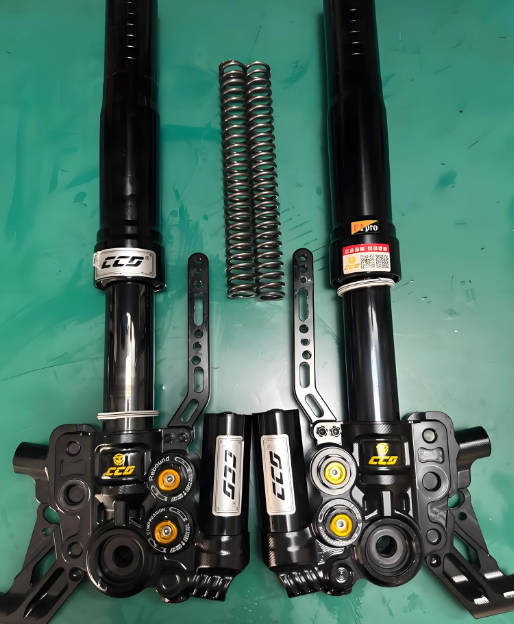
Key Inspection Parameters for Shock Absorbers
1. Visual and External Integrity Inspection
We examine the shock absorber body for dents, corrosion, paint blistering, and weld integrity. The piston rod is checked for pitting, scoring, chrome flaking, or bending (using a dial gauge). Even minor rod damage will destroy the rod seal and cause oil leakage. Rubber bushings at mounting eyes are inspected for cracks, hardening, or permanent deformation.
2. Leakage Detection (Oil and Gas)
Using a clean white cloth, we wipe the rod seal area and the lower mounting eye. Any oil residue indicates seal failure. For gas‑charged (monotube) shocks, we listen for hissing gas release when manually compressing the unit. A dead gas charge (no resistance at the start of compression) requires immediate replacement.
3. Damping Force Measurement (Force‑Velocity Characteristics)
We mount the shock absorber on a servo‑hydraulic test machine. The unit is cycled at velocities ranging from 0.05 m/s to 0.5 m/s (simulating slow rolling to sharp bumps) while recording compression and rebound forces. The force‑velocity curve is compared to the OEM specification (or a known‑good reference sample). A loss of > 30% in damping force at any velocity indicates internal wear or oil degradation. We also calculate the asymmetry ratio (rebound force / compression force) – a deviation > ±15% from the nominal ratio suggests valve damage.
4. Gas Pressure Measurement (for Gas‑Charged Shocks)
Using a specialized gas pressure gauge (with a needle that pierces the gas reservoir), we measure the nitrogen charge pressure (typically 5–25 bar). Low gas pressure reduces damping consistency and increases aeration risk. For adjustable shocks, we verify that gas pressure remains stable across all adjustment settings.
5. Friction Force (Breakaway and Sliding Friction)
At very low velocity (0.005 m/s), we measure the force required to initiate piston rod movement. Excessive stiction (> 50 N) leads to harsh ride over small bumps. Sliding friction is measured at constant low velocity; high friction (> 100 N) indicates worn piston rings or contaminated oil.
6. Temperature Stability Test
We run the shock absorber on a dynamometer for 20 minutes at 1 Hz, simulating continuous rough road operation. Using an infrared thermal imager, we monitor body temperature. Excessive heating (> 40°C above ambient) indicates high internal friction, aerated oil, or insufficient oil volume. After the test, we repeat the force‑velocity measurement; a change of > 15% indicates poor fade resistance.
7. Rod Guide and Bushing Wear Measurement
After disassembly (for post‑test forensic analysis), we measure the clearance between the piston rod and the guide bush using a dial bore gauge. Excessive clearance (> 0.2 mm) causes side loading and oil bypass. The piston ring end gap is also measured; excessive gap reduces compression damping.
8. Oil Condition Analysis (for hydraulic shocks)
We extract a small oil sample and measure viscosity at 40°C and 100°C (ASTM D445). A decrease in viscosity > 20% indicates oil shear‑down; an increase > 20% suggests contamination or oxidation. We also inspect for metal particles (using a magnet) or black sludge (worn seals).
9. Corrosion Resistance (Salt Spray Test – for coastal applications)
For vehicles operating near the Caspian Sea (high salt spray), we expose shock absorber samples to neutral salt spray (5% NaCl, 35°C) for 240 hours per ASTM B117. After exposure, we inspect for red rust on the body and rod pitting. Acceptable: surface rust on non‑critical areas only, no rust on the rod or seal area.
10. Noise and Vibration Testing (Rattle and Squeak)
On a shock dynamometer with a microphone (50 cm distance), we run the unit at low amplitude (2 mm) and varying frequencies (1–10 Hz). Any audible squeaking (rubber‑on‑metal) or knocking (loose internal components) is recorded. We also mount the shock on a test vehicle and drive over a standard bump track to detect real‑world noise.
Quality Grading and Acceptance Criteria
Based on our shock absorber inspection, we classify units into three grades (clients provide specific acceptance criteria):
- Grade A (Serviceable) – No leaks, damping force within ±15% of spec, gas pressure within ±10% of spec, friction force < 30 N, no corrosion on rod.
- Grade B (Marginal – monitor) – Damping force within ±15–30% of spec, minor oil seepage (no drips), gas pressure within ±10–20% of spec, slight rod pitting. Recommend retest in 6 months.
- Grade C (Replace immediately) – Visible oil dripping, damping force loss > 30%, gas pressure loss > 20%, rod pitting or scoring, bushing cracked, or any noise during operation.
Reporting and Deliverables
Our shock absorber inspection report includes: unit identification (brand, model, mileage, vehicle application), visual and leakage findings (photos), force‑velocity curves (compression and rebound) compared to OEM reference, gas pressure reading, friction force value, oil viscosity and particle analysis (if performed), thermal image of body temperature, and a clear recommendation (serviceable / monitor / replace). Raw data (force curves, thermal images, oil analysis logs) are archived for 10 years. We do not issue generic compliance statements without client‑specific acceptance criteria.
In summary, systematic shock absorber inspection extends vehicle life, improves road holding, and reduces secondary suspension wear. Whether you manage a taxi fleet, a bus company, or your personal vehicle, contact our Baku laboratory to schedule an inspection before the next technical vehicle inspection (TVT) period.
Applications in the Azerbaijani Market
- Fleet operators (taxis, ride‑hailing services, delivery vans): Reduce tire wear and improve fuel economy.
- Public transport (buses, minibuses): Enhance passenger comfort and prevent premature suspension wear.
- Off‑road vehicles (SUVs, pickups used in mountainous regions): Verify shock performance after severe off‑road use.
- Used car importers: Inspect suspension before sale to avoid post‑purchase complaints.
- Technical vehicle inspection (TVT) centers: Third‑party verification of shock absorber condition before annual inspection.
Why Choose ZKGX?
- State-of-the-art analytical equipment
- Highly qualified scientific team
- Fast turnaround time
- Competitive pricing