
Thermal Storage Electric Heater Testing – Performance, Safety and Efficiency Evaluation for Off‑Peak Heating Systems
In Azerbaijan’s residential and commercial sectors, where winter temperatures can drop below freezing, thermal storage electric heater testing is essential to verify that these devices safely store heat during off‑peak hours and release it gradually to maintain comfortable indoor temperatures. Thermal storage heaters (also known as storage radiators or night storage heaters) use ceramic bricks or phase change materials (PCM) to store thermal energy when electricity prices are low (typically at night) and release it during daytime. Our ISO/IEC 17025 accredited laboratory performs comprehensive testing – including thermal output measurement, charging/discharging cycle performance, surface temperature limits, electrical safety (insulation resistance, leakage current, dielectric strength), mechanical durability, and energy efficiency – to ensure compliance with international standards (IEC 60335‑2‑61, EN 60531, EN 15218) and Azerbaijani electrical safety regulations.
Why Thermal Storage Electric Heater Testing is Critical for Off‑Peak Heating Systems
With the growing adoption of time‑of‑use electricity tariffs in Azerbaijan (especially in Baku, Ganja, and Sumgayit), thermal storage heaters help consumers reduce heating costs by shifting energy consumption to nighttime. However, a poorly designed or degraded heater can fail to store sufficient heat, overheat the casing, emit burning odors, or become an electrical fire hazard. A systematic thermal storage electric heater testing protocol helps manufacturers validate new designs, importers verify batch quality, and maintenance teams assess aging units before winter.
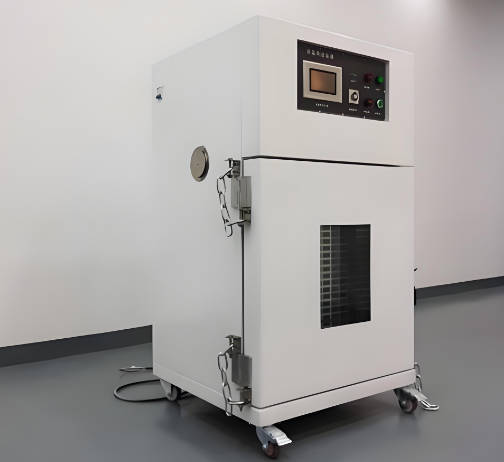
Key Performance Parameters and Test Methods
1. Thermal Output Measurement (Heat Release Profile) – EN 60531
We place the heater in a calibrated calorimetric test room equipped with temperature sensors and a data acquisition system. The heater undergoes a full charge cycle (typically 8 hours at rated power) followed by an 8‑hour discharge period. We measure the heat output (in Wh) and plot the temperature rise of the test room over time. The test determines whether the heater meets the manufacturer’s declared thermal storage capacity. A failing unit will discharge heat too quickly (short comfort period) or retain heat excessively (poor regulation).
2. Charging Efficiency (Energy Storage Efficiency)
Using a precision energy meter, we record the electrical energy input (kWh) during the charging phase. Simultaneously, we measure the stored thermal energy using thermocouples embedded in the ceramic core. Charging efficiency = (stored thermal energy / electrical energy input) × 100%. Acceptable values for modern thermal storage heaters are typically > 85%.
3. Surface Temperature Limits – Safety Against Burns
During both charging and discharging cycles, we measure the external surface temperature of the heater (front, sides, top, and bottom) using an infrared thermal imager and contact thermocouples. According to IEC 60335‑2‑61, accessible metal surfaces shall not exceed 85°C, and non‑metal surfaces shall not exceed 95°C. Units that exceed these limits pose a burn hazard to children, elderly users, or pets.
4. Core Temperature Uniformity (Ceramic Brick Distribution)
We embed multiple thermocouples at different heights and depths within the ceramic core. The temperature difference between the hottest and coldest point during the charging phase should not exceed 20°C. A higher gradient indicates uneven heat distribution, poor brick stacking, or inadequate insulation, leading to reduced storage capacity.
5. Charge Retention Time (Self‑Discharge Rate)
After the charging phase is complete, we disconnect the heater from power and measure the core temperature drop over 2 hours (without fan assistance). The retention time is the duration for which the core remains above the useful release threshold (e.g., 40°C). Acceptable retention: > 4 hours.
6. Temperature Output Regulation (Thermostat/Controller Accuracy)
We set the thermostat at various positions (minimum, medium, maximum) and measure the output temperature at the air outlet using an anemometer and thermocouple array. The heater should stabilize within ±2°C of the setpoint. Fluctuating output indicates faulty thermostats, sticky dampers, or obstructed air passages.
7. Electrical Safety Tests – IEC 60335‑1 / IEC 60335‑2‑61
Insulation resistance: We apply 500 V DC between live parts and accessible metal parts; minimum acceptable resistance is 5 MΩ (or 1 MΩ for older units).
Dielectric strength: We apply 1500 V AC (or 2500 V for some standards) for 1 minute. No breakdown or flashover permitted.
Leakage current: Measured at 1.06 times rated voltage; must be below 0.75 mA for class II appliances.
Earthing continuity: For class I heaters, the resistance between the earth pin and accessible conductive parts must be ≤ 0.1 Ω.
8. Abnormal Operation (Overheating and Thermal Cut‑out Testing)
We simulate blocked air outlets, fan failure (if present), or excessive thermal insulation. The heater’s thermal cut‑out (thermostat or one‑shot thermal fuse) must activate before any component exceeds the material’s temperature limit. After the cut‑out operates, the heater must not re‑energize without manual reset (for safety).
9. Mechanical Durability – Damper and Fan Life Cycle (for fan‑assisted units)
For heaters with internal fans or motorized dampers, we subject the damper mechanism to 10,000 open‑close cycles and the fan motor to 2000 hours of continuous operation. After cycling, we re‑test air flow and noise level (dBA). No degradation beyond manufacturer limits is allowed.
10. Acoustic Noise Measurement (for fan‑assisted thermal storage heaters)
Using a sound level meter at 1 meter distance (both front and sides), we measure noise emission during fan operation. For residential units, acceptable limits are ≤ 45 dBA. Excessive noise may indicate fan imbalance, worn bearings, or air turbulence.
11. UV and Material Aging (for plastic components)
For outdoor or balcony‑installed units, we expose plastic grilles, casings, and vents to UV radiation (xenon arc, 1000 hours) per ISO 4892‑2. After exposure, we check for color change (ΔE), cracking, and loss of impact resistance. Yellowing or brittleness indicates poor UV stabilization.
Quality Grading and Acceptance Criteria
Based on our thermal storage electric heater testing, we classify units into three quality categories (clients provide specific acceptance criteria):
- Premium (Grade A) – Charging efficiency > 88%, surface temperature < 80°C, temperature uniformity < 15°C, fan noise < 42 dBA, insulation resistance > 10 MΩ.
- Standard (Grade B) – Charging efficiency 85–88%, surface temperature 80–85°C, temperature uniformity 15–20°C, fan noise 42–45 dBA, insulation resistance 5–10 MΩ.
- Poor (Grade C) – Charging efficiency < 85%, surface temperature > 85°C, temperature uniformity > 20°C, fan noise > 45 dBA, insulation resistance < 5 MΩ – not recommended for use.
Reporting and Deliverables
Our test report includes sample identification (manufacturer, model, serial number, rated power, storage mass), each performance parameter with measured values and reference limits, thermal images of surface temperature distribution, core temperature profiles during charge/discharge, electrical safety test logs, and a clear pass/fail conclusion based on client‑supplied specifications. Raw data (thermocouple logs, energy meter readings, sound recordings) are archived for 10 years. We do not issue generic compliance statements without specific acceptance criteria.
In summary, rigorous thermal storage electric heater testing ensures that these off‑peak heating systems provide safe, efficient, and comfortable warmth for Azerbaijani homes and offices. Contact our Baku laboratory to schedule batch testing, new product validation, or in‑service inspections before the heating season begins.
Applications in the Azerbaijani Market
- Residential apartments and homes (Baku, Ganja, Sumgayit, Mingachevir): Pre‑installation quality verification of imported thermal storage heaters.
- Public buildings (schools, hospitals, government offices): Compliance with electrical safety and surface temperature limits.
- Hotels and commercial complexes: Energy efficiency validation for off‑peak tariff savings.
- Maintenance and repair workshops: Diagnostic testing of aging heaters (reduced output, overheating, noise).
- Export to neighboring markets (Georgia, Turkey, Russia, Iran): Conformity with destination country standards.
Why Choose ZKGX?
- State-of-the-art analytical equipment
- Highly qualified scientific team
- Fast turnaround time
- Competitive pricing