
Fire Hose Testing – Ensuring Reliability and Safety for Firefighting Operations in Azerbaijan
In Azerbaijan’s rapidly developing oil, gas, and construction sectors, fire hose testing is a critical component of fire safety management, ensuring that hoses used by industrial plants, fire brigades, and commercial facilities can withstand operational pressures and deliver water reliably during emergencies. Our ISO/IEC 17025 accredited laboratory performs comprehensive testing on new and in‑service fire hoses – including pressure tests, leak detection, adhesion, abrasion resistance, and aging – to verify compliance with international standards (ISO 15540, EN 694, ASTM F2203) and local civil defense regulations.
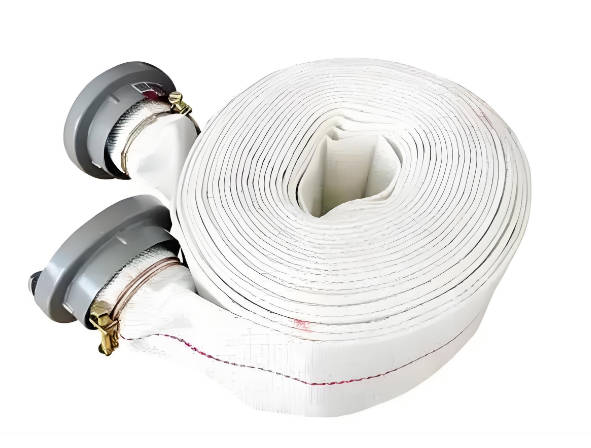
Why Fire Hose Testing is Essential for Asset Protection and Life Safety
Regular fire hose testing identifies hidden weaknesses such as liner separation, outer jacket degradation, coupling corrosion, or low burst pressure before a fire event occurs. Our testing protocols simulate real‑world conditions: hydrostatic pressure, flow rate, kink resistance, and UV/chemical exposure. We also inspect hose couplings (thread type, gasket condition, swivel operation) and verify marking compliance. By detecting defects early, we help facility managers maintain operational readiness, avoid insurance disputes, and meet legal requirements under Azerbaijan’s fire safety code.
Key Testing Parameters for Fire Hose Performance
1. Hydrostatic Pressure Test – Service and Burst
We fill the hose with water, remove air, and apply a pressure of 1.5× the rated working pressure (e.g., 15 bar for a 10 bar hose) for 5 minutes. No leakage, swelling, or rupture is allowed. Burst test continues until failure, recording the pressure at which the hose bursts – must exceed 3× working pressure (minimum).
2. Dimensional Check (Length, Diameter, Coupling Size)
We measure the hose length under tension, internal diameter, and outer diameter. Coupling thread gauge verifies compatibility with local hydrants (e.g., GOST or Storz). Acceptable tolerance: length ±1%, diameter ±0.5 mm.
3. Adhesion Between Liner and Jacket (for lined hoses)
A sample is peeled to measure the force required to separate the inner liner from the outer jacket. Minimum peel strength is specified (e.g., 25 N/50 mm). Poor adhesion leads to liner collapse during suction or flow restriction.
4. Abrasion Resistance (Taber or Martindale)
The jacket material is subjected to a defined number of rubbing cycles under pressure. Mass loss or visual wear is recorded. This is critical for hoses dragged over rough ground or concrete surfaces.
5. Aging Resistance (Thermal and UV)
Hose samples are aged in an oven (70°C, 168 hours) or a UV chamber (xenon arc, 500 hours). After aging, we repeat the hydrostatic test and measure tensile strength of the jacket. Loss of strength > 20% indicates insufficient aging resistance.
6. Coupling Attachment Strength and Corrosion
We measure the force required to pull a coupling off the hose end (minimum 1.5× working pressure equivalent force). Couplings are inspected for corrosion (salt spray test, 240 hours) – no red rust allowed on zinc‑plated or stainless steel parts.
7. Flow Rate and Pressure Loss
Using a calibrated flow bench, we measure the pressure drop across the hose at specified flow rates (e.g., 200 L/min, 500 L/min). Excessive pressure loss (> 10% of inlet pressure) indicates internal roughness or kinking tendency.
8. Kink Resistance (Minimum Bend Radius)
The hose is bent around a mandrel of specified diameter while pressurized. No flattening, cracking, or flow obstruction is permitted.
In‑Service Fire Hose Testing Protocols
For hoses already deployed, we perform annual visual inspection, hydrostatic test (at 1.2× working pressure), and coupling function check. Hoses with any signs of abrasion, cuts, or oil damage are removed from service. We also test stored hoses for mildew or mold growth (humidity chamber).
Reporting and Documentation
Our fire hose testing report includes:
- Hose identification (manufacturer, model, diameter, length, rated pressure, batch number).
- Visual inspection photographs (defects, coupling condition).
- Hydrostatic test results (pressure, duration, observations).
- Burst pressure (if performed).
- Dimensional, adhesion, abrasion, and aging data.
- Coupling torque and corrosion rating.
- Pass/fail conclusion based on client‑supplied specifications.
- Raw data (pressure graphs, peel force curves) archived for 10 years.
We do not issue generic compliance statements without specific acceptance criteria. Our reports are accepted by local fire authorities, insurance companies, and industrial safety auditors.
In summary, thorough fire hose testing protects lives, property, and business continuity by ensuring that hoses will perform when needed. Contact our Baku laboratory to schedule routine testing for your firefighting equipment.
Applications in Azerbaijan
- Oil refineries (Baku, Sumgayit, Sangachal): Offshore and onshore firewater systems.
- Commercial buildings (Port Baku, Flame Towers, Baku Boulevard): Annual recertification of fire hose reels.
- Industrial plants (Mingachevir, Ganja): Fire hose testing for petrochemical and textile factories.
- Public facilities (airports, metro, hospitals): Compliance with civil defense requirements.
- Fire departments (Ministry of Emergency Situations): Acceptance testing of new hose batches.
Why Choose ZKGX?
- State-of-the-art analytical equipment
- Highly qualified scientific team
- Fast turnaround time
- Competitive pricing