
Engineering Plastic Distribution Boxes Testing – Ensuring Electrical Safety and Durability in Harsh Environments
In Azerbaijan’s rapidly expanding industrial and infrastructure sectors, engineering plastic distribution boxes testing is essential to verify that enclosures used for electrical distribution, metering, and control can withstand mechanical impact, thermal stress, moisture ingress, and chemical exposure. Our ISO/IEC 17025 accredited laboratory performs comprehensive evaluations on distribution boxes made from high‑performance thermoplastics (ABS, polycarbonate, polyester, GRP) to ensure compliance with international standards (IEC 62208, IEC 60529, UL 94) and local operational requirements.
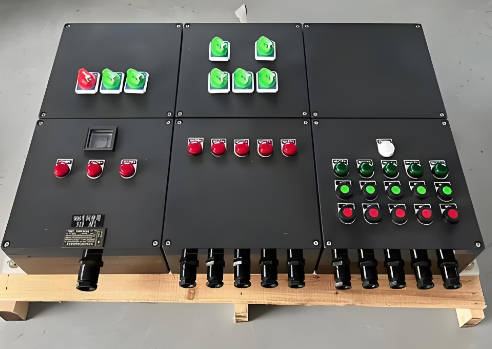
Key Performance Parameters Evaluated in Engineering Plastic Distribution Boxes Testing
To guarantee long‑term reliability, we examine multiple critical characteristics of these enclosures.
1. Degree of Protection (IP Code) – IEC 60529
We test boxes for ingress of solid objects and water. Dust chambers and water spray nozzles are used to verify ratings such as IP66 (dust‑tight and protected against powerful water jets) or IP67 (temporary immersion). Any internal moisture or dust ingress constitutes a failure.
2. Impact Resistance (IK Code) – IEC 62262
Using a pendulum or spring‑hammer impact tester, we apply specified energy levels (e.g., 2 J, 5 J, 10 J) to different faces of the box. No cracking, breakage, or exposure of live parts is allowed. This test is critical for boxes installed in public areas or industrial plants where accidental impacts may occur.
3. Material Flammability – UL 94 / IEC 60695
We test the plastic material’s self‑extinguishing properties. Vertical and horizontal flame tests determine the V‑0, V‑1, or V‑2 rating. For distribution boxes, a V‑0 rating (flame extinguishes within 10 seconds, no flaming drips) is often required for fire safety.
4. Thermal Stability (Ball Pressure Test) – IEC 60695-10-2
A steel ball is pressed into the plastic surface at elevated temperature (75°C or 125°C depending on application). Indentation diameter must not exceed 2 mm, ensuring that the box does not deform under normal operating heat.
5. Glow Wire Test (GWEPT) – IEC 60695-2-11
A red‑hot glow wire (550°C, 650°C, or 850°C) is applied to the plastic for 30 seconds. The material must self‑extinguish within 30 seconds after removal and not ignite a tissue placed underneath. This simulates overheating of electrical connections.
6. Mechanical Strength of Door and Hinge
We perform repetitive opening and closing cycles (5000 cycles minimum) while measuring hinge torque and latch integrity. After the test, the door must still close securely and maintain the IP rating.
7. Corrosion Resistance (for metal inserts and mounting plates)
While the plastic housing itself is corrosion‑resistant, we test any metal parts (hinges, screws, grounding plates) in a salt spray chamber (48–240 hours) to ensure no red rust appears.
Environmental Simulation and Aging Tests
8. UV Resistance (Xenon Arc or QUV)
For boxes used outdoors, we expose samples to UV radiation and water spray cycles for 500–1000 hours. After exposure, we re‑test impact strength and color change (ΔE) – acceptable limits are a maximum of 30% reduction in impact strength and ΔE < 5.
9. Temperature Cycling (–25°C to +70°C)
Boxes are cycled between low and high temperatures (e.g., 50 cycles) while monitoring for cracking, warping, or seal failure. This simulates the harsh climate of Azerbaijan, where summers can exceed 40°C and winters drop below freezing in mountainous regions.
10. Sealing Gasket Performance
We measure compression set of the elastomeric gasket after accelerated aging at 70°C for 7 days. Excessive permanent deformation reduces sealing effectiveness. We also verify that the gasket material is resistant to oil, UV, and ozone when specified.
Electrical Safety Tests for Distribution Boxes
Even though the housing is non‑metallic, we still verify electrical integrity of built‑in terminals and grounding continuity.
- Insulation resistance – Measured between live parts and accessible surfaces (≥ 5 MΩ).
- Dielectric strength – 2000 V AC for 1 minute, no breakdown.
- Grounding continuity – Resistance between external grounding points and internal mounting plate ≤ 0.1 Ω.
Reporting and Deliverables
Our engineering plastic distribution boxes testing report includes:
- Sample description (material type, dimensions, IP/IK rating claims).
- Test conditions (temperature, humidity, test equipment calibration).
- Results for each parameter (IP, IK, flammability, thermal stability, UV, etc.).
- Photographs of any defects (cracks, deformation, discoloration).
- Comparison with client‑supplied acceptance criteria – pass/fail conclusion.
- Raw data (thermocouple logs, flame test videos, glow wire timings) archived for 10 years.
We do not issue a generic compliance statement unless the client provides specific acceptance limits. Our reports are accepted by local construction authorities, electrical inspectors, and importers for type approval and batch release.
Applications in the Azerbaijani Market
- Oil and gas facilities (Baku, Sumgayit, Sangachal terminal): Distribution boxes requiring high impact resistance and flame retardancy for hazardous areas.
- Residential and commercial construction (Baku, Ganja, Mingachevir): IP‑rated boxes for outdoor meter cabinets and public lighting.
- Renewable energy solar farms (going photovoltaic capacity): UV‑resistant enclosures for string combiner boxes.
- Industrial automation: GRP boxes for chemical resistance in petrochemical plants.
Why Choose ZKGX?
- State-of-the-art analytical equipment
- Highly qualified scientific team
- Fast turnaround time
- Competitive pricing