
Container Bag Inspection – Quality Assurance for FIBCs Used in Agriculture, Construction, Mining and Chemical Industries in Azerbaijan
As an ISO/IEC 17025 accredited (CNAS) independent laboratory, we provide specialized inspection and testing services for flexible intermediate bulk containers (FIBCs), commonly known as container bags or big bags, to manufacturers, importers, logistics companies, and industrial end‑users in Azerbaijan. Container bags are widely used for storing and transporting bulk materials such as agricultural products (grain, sugar, flour, fertilizers), construction materials (sand, cement, gravel), mining concentrates (copper, iron, gold), and chemical powders (resins, pigments, plastic granules). Their structural integrity, lifting capacity, UV resistance, and safety features (conductive or grounded types for flammable dusts) are critical to prevent spillage, accidents, and product contamination. Our laboratory performs a comprehensive range of tests on new and used FIBCs: dimensional verification, lifting loop strength (single and double loop), bottom seam strength, fabric tensile and tear strength, stacking performance, UV degradation resistance, electrostatic properties (Type A, B, C, D classification), and permeability. We follow internationally recognized test procedures (ISO 21898, EN 277, etc.) adapted to the specific requirements of the Azerbaijani mining, construction, and agricultural sectors. Results help manufacturers certify product quality, importers verify compliance with purchase specifications, and end‑users ensure safe handling and storage of bulk materials.
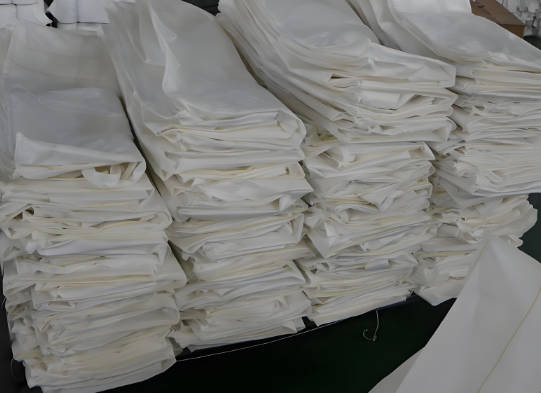
Types of Container Bags We Inspect
- Standard FIBCs (Type A – non‑conductive, general use)
- Anti‑static FIBCs (Type B – low breakdown voltage, prevents propagating brush discharges)
- Conductive FIBCs (Type C – with grounding tabs, for flammable dust environments)
- Groundable FIBCs (Type C with liners)
- Type D FIBCs (static protective without grounding, using anti‑static fabric)
- Bags with different lifting options (single loop, double loop, cross‑corner)
- Bags with discharge spouts (plain, with tie, or dust‑proof)
- Bags with polyethylene liners (for moisture‑sensitive products)
- UV‑treated and non‑UV‑treated bags (for outdoor storage)
- Used or reconditioned FIBCs (for residual strength assessment)
Key Inspection Parameters and Defects Detected
- Dimensional accuracy – Width, length, height, lifting loop dimensions, spout diameter.
- Lifting loop strength (single and double loop) – Safe working load (SWL) verification – Loops must withstand at least 5× the rated SWL for 5 minutes without damage.
- Bottom seam strength (cross seam or diagonal seam) – Prevents bottom blow‑out during filling and stacking.
- Fabric tensile strength (warp and weft) – Determines resistance to tearing under tension.
- Tear propagation resistance (trouser tear method) – Measures resistance to tear growth once initiated.
- Stacking performance (compression test) – Simulates load from stacked bags in warehouse or container.
- UV resistance (accelerated weathering) – Loss of strength after exposure to sunlight (critical for outdoor storage in Azerbaijan’s sunny climate).
- Electrostatic properties (Type A, B, C, D classification) – Ensures safe use in explosive dust atmospheres (e.g., grain elevators, chemical plants).
- Permeability (dust‑tightness) – For powders, prevents leakage of fine particles through fabric pores.
- Stitching integrity (thread type, stitch density, seam overlap) – Loose or missing stitches lead to bag failure.
- Labeling and traceability (SWL, batch number, manufacturer, type) – Essential for safe operation.
Test Methods and Inspection Procedures
1. Visual and Dimensional Inspection
Each bag is visually examined for weaving defects, holes, fabric contamination, stitching irregularities, and correct fitting of lifting loops and spouts. Dimensions are measured with a steel tape or calibrated ruler. We check that bag width, length, height, and lifting loop length conform to the order specification (tolerance typically ±2%).
2. Lifting Loop Strength Test (Safety Factor Verification)
A new bag is placed on a tensile test frame. The lifting loops are attached to the crosshead via a spreading device. A force equal to 5 times the rated Safe Working Load (SWL) is applied and maintained for 5 minutes. The bag passes if no loop breaks, no seam tears, and no fabric rupture occurs. After the test, we also inspect for permanent deformation (> 10% elongation is cause for concern).
3. Bottom Seam Strength Test (Cross Seam / Diagonal Seam)
A section of the bottom seam (or a complete bag bottom) is cut out and tested in tension (simulating pressure from contents). Alternatively, a filled bag is raised and dropped to simulate impact. We measure the force at which the seam fails. Minimum force must exceed a multiple of the intended filling weight (typically 2×).
4. Fabric Tensile Strength (Strip Method)
Samples are cut from the bag fabric in both warp (machine) and weft (cross) directions. Rectangular test specimens (50 mm wide) are clamped in a universal testing machine and pulled at a constant speed (100 mm/min). The maximum tensile force (N/50mm) is recorded. Typical minimum requirements: 1000 N/50mm for polypropylene woven fabric.
5. Tear Propagation Resistance (Trouser Tear)
A rectangular specimen (200×50 mm) is cut lengthwise along the center for 100 mm to create two legs. Each leg is clamped in the testing machine, and the force required to propagate a tear is measured. Acceptable tear resistance depends on fabric weight and coating; for coated fabrics, typical > 50 N.
6. Stacking Performance (Compression Test)
A filled bag (with a standard test material such as dry sand or plastic pellets) is placed in a compression frame. A load equal to the weight of 3–5 stacked bags (depending on specification) is applied for 1 hour. The bag is inspected for seam rupture, fabric tearing, or excessive deformation (> 10% height reduction).
7. UV Resistance (Accelerated Weathering)
Samples of the bag fabric are exposed to UV radiation (xenon arc or fluorescent UV lamps) for a specified period (e.g., 500, 1000, 2000 hours) according to standard protocols. After exposure, tensile strength and tear strength are re‑measured. A loss of strength of more than 30% indicates inadequate UV stabilization.
8. Electrostatic Properties Classification
We measure the electrical resistance (surface and volume resistivity) of the fabric using a megohmmeter (specified voltage). For Type C FIBCs (groundable), we verify the presence of grounding tabs and measure the resistance between any two points on the bag (should be ≤ 10⁶ Ω). For Type D bags, we test for anti‑static discharge properties (complex test using an electrode assembly to measure brush discharge energy). The correct type classification is then assigned according to the application (e.g., for dust explosion zones).
9. Permeability (Air Flow or Dust Retention)
A sample of fabric is clamped in a permeability tester. Air is drawn through at a defined pressure difference (e.g., 200 Pa). The flow rate (L/m²/s) is measured. For dust‑tight bags, low permeability (e.g., < 5 L/m²/s) is desired. Alternatively, a fine powder (e.g., talc) is poured into the bag and the bag is shaken; any visible dust leakage is recorded.
10. Stitching Inspection
We examine all seams (bottom, side, lifting loop attachment) for stitch density (stitches per 100 mm). For polypropylene bags, a minimum of 4–6 stitches per 100 mm is typical. The thread type must be UV‑resistant polyester or polypropylene (not cotton). We also check that seam overlap is at least 20 mm and that thread ends are locked (not loose).
Quality Control and Acceptance Criteria (Typical Benchmarks)
The following are typical requirements for industrial FIBCs. Clients must provide their specific acceptance criteria for each parameter.
- Lifting loop strength: withstand 5× SWL for 5 minutes, no failure.
- Bottom seam strength: ≥ 2× filling weight (or ≥ 5000 N for standard 1000 kg bag).
- Tensile strength (fabric): ≥ 1000 N/50mm (warp), ≥ 800 N/50mm (weft).
- Tear resistance: ≥ 50 N (trouser tear).
- UV resistance (after 500 hours): strength retention ≥ 70%.
- Electrostatic properties: Type C resistance ≤ 10⁶ Ω between any two points (when grounded).
- Permeability: ≤ 10 L/m²/s at 200 Pa for dust‑tight applications.
- Stitch density: ≥ 5 stitches per 100 mm.
- Dimensional tolerance: ± 2% of nominal dimensions.
Reporting and Deliverables
Each container bag inspection report includes the following information:
- Bag identification (manufacturer, type, SWL, batch number, dimensions, liner type).
- Visual and dimensional findings (photos of defects).
- Lifting loop strength result (force applied, duration, pass/fail).
- Bottom seam strength result (force at failure, pass/fail).
- Fabric tensile strength values (N/50mm) and tear resistance (N).
- Stacking test result (load, duration, deformation).
- UV resistance (strength retention after exposure).
- Electrostatic type classification (A, B, C, D) and measured resistance values (if Type C).
- Permeability (L/m²/s) and dust retention observation.
- Stitching inspection (density, thread type, seam overlap).
- Overall conclusion: “Conforming” / “Non‑conforming” (based on client criteria).
- Raw data (test curves, images, logs) archived for 10 years.
No statement of compliance with any external standard or regulation is made unless the client has provided specific acceptance criteria in writing. The report is intended for procurement quality control, export certification, and safe handling in Azerbaijan’s logistics chain.
Applications in the Azerbaijani Industry
- Agriculture (cotton, grain, sugar, fertilizers): Inspection of FIBCs for storage and export through the Port of Baku.
- Construction (cement, sand, aggregates): Testing lifting loops and bottom seams for safety on construction sites.
- Mining (copper, gold, iron ore concentrates): Verification of UV resistance and tear strength for outdoor storage.
- Chemical and petrochemical (Sumgayit, Baku): Electrostatic classification (Type C/D) for flammable dust areas.
- Logistics and warehousing: Certification of reconditioned FIBCs for reuse in the supply chain.
Why Choose ZKGX?
- State-of-the-art analytical equipment
- Highly qualified scientific team
- Fast turnaround time
- Competitive pricing